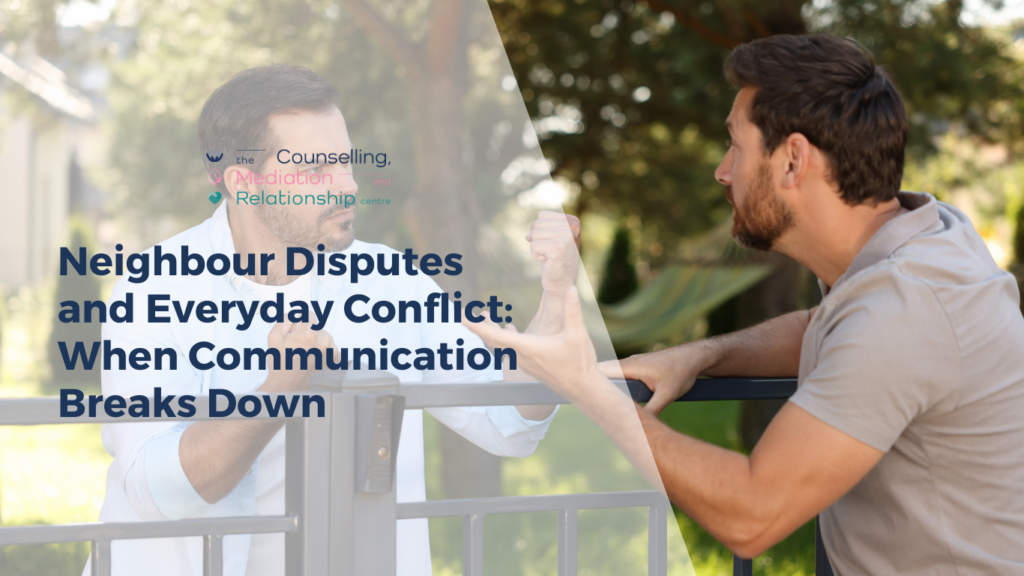
Neighbour Disputes and Everyday Conflict: When Communication Breaks Down
Not all conflict begins with something major.
Sometimes, it starts with something small. A misunderstanding about shared space. A disagreement over boundaries. A conversation that didn’t quite go as planned.
Over time, if left unresolved, these everyday disputes can grow into ongoing tension that affects not just the individuals involved, but the wider community as well.
When Minor Issues Become Ongoing Disputes
Neighbour disagreements often begin with practical concerns such as:
- Property boundaries
- Fencing or shared structures
- Noise levels
- Water use or drainage
- Parking or access
What may start as a simple request or conversation can escalate if communication breaks down or becomes emotionally charged.
Repeated arguments, raised voices, or frustration can make it difficult for either party to feel heard. Over time, this may lead to avoidance, hostility, or ongoing stress within what should be a safe living environment.
The Impact of Prolonged Conflict
Living alongside unresolved conflict can create tension that extends beyond the original issue.
Individuals may begin to feel:
- Anxious in their own home
- Frustrated or misunderstood
- Uncomfortable using shared spaces
- Concerned about further confrontation
In some situations, disagreements may even progress to formal complaints or legal proceedings, which can be time-consuming and emotionally draining for everyone involved.
Why Communication Often Breaks Down
In neighbour disputes, both parties may feel they are being reasonable.
However, without a neutral space to discuss concerns:
- Assumptions can replace facts
- Emotions can override practical discussion
- Misunderstandings can remain unresolved
- Solutions may feel one-sided or unfair
Direct conversations may no longer feel productive once frustration builds, making it harder to reach an agreement without support.
How Mediation Can Help
Mediation provides a structured environment where each person has the opportunity to:
- Share their concerns respectfully
- Clarify misunderstandings
- Explore practical options
- Establish clear boundaries
- Develop mutually agreed solutions
Rather than focusing on blame, mediation focuses on outcomes that allow everyone to move forward with clarity.
This may include agreements around property use, communication expectations, or shared responsibilities.
Importantly, mediation is confidential and voluntary, allowing both parties to participate in a way that feels constructive rather than adversarial.
Neighbour relationships play an important role in everyday wellbeing. Addressing conflict early through respectful communication and supported discussion can help restore a sense of comfort and stability within the community.





 Previous Post
 Next Post