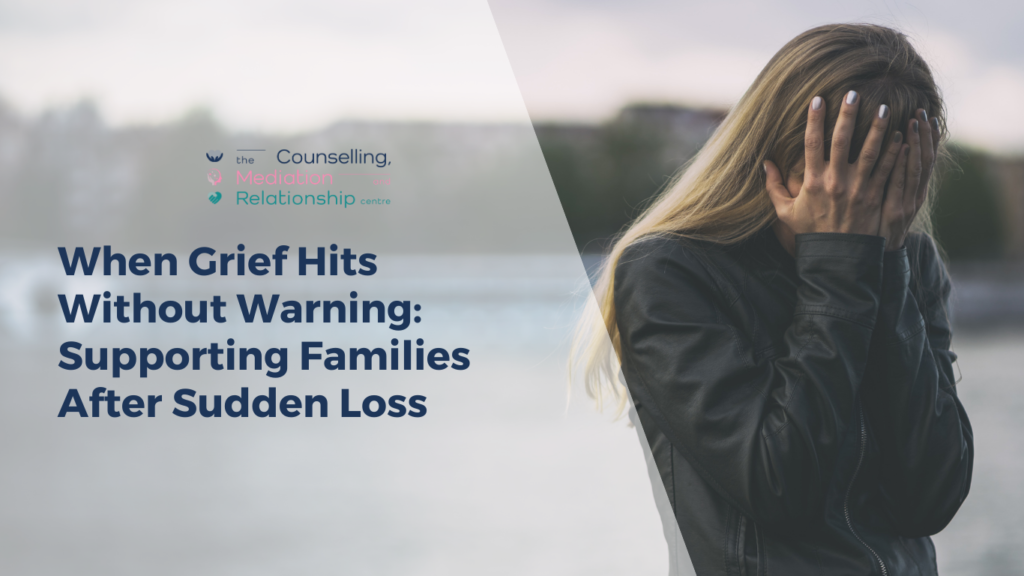
When Grief Hits Without Warning: Supporting Families After Sudden Loss
Grief is never easy, but when loss comes without warning, it can leave families feeling overwhelmed, unprepared, and unsure of how to move forward.
Sudden loss does not just bring sadness. It can bring confusion, shock, changes in family roles, and emotional responses that may look very different from one person to the next.
In families where there are children involved, the impact of grief can be especially complex.
The Ripple Effect of Unexpected Loss
When a significant loss occurs suddenly, families often have to navigate multiple changes at once.
This may include:
- Shifts in caregiving roles
- Changes in household structure
- Emotional withdrawal or heightened sensitivity
- Practical responsibilities being taken on by different family members
- Difficult conversations that were never expected to happen
Children may struggle to understand what has happened or why things around them feel different. They may not yet have the emotional tools to process grief in the same way adults do.
How Children Experience Grief
Grief in children does not always appear as sadness.
Instead, it may present as:
- Behavioural changes
- Difficulty concentrating at school
- Anxiety about safety or stability
- Withdrawal from friends or activities
- Anger or frustration
- Regressive behaviour
Sometimes, children may not show any visible response at all in the early stages. This does not mean they are unaffected. Grief can surface gradually over time, especially as changes within the family become more apparent.
When Grief Creates Tension Within Families
Loss can also place emotional strain on relationships between parents, caregivers, or extended family members.
Different coping styles, differing views on decision-making, or stress related to new responsibilities may lead to:
- Misunderstandings
- Communication breakdown
- Disagreements about routines or care
- Emotional distance between family members
During times of grief, these tensions are often not intentional but can still impact the stability children rely on.
The Role of Mediation and Counselling
Support services such as mediation and counselling can help families navigate both the emotional and practical challenges that arise after sudden loss.
Mediation provides a structured space for:
- Discussing changing responsibilities
- Clarifying expectations
- Supporting communication between caregivers
- Establishing routines for children
- Making decisions collaboratively
Counselling can support individuals and families in:
- Processing grief
- Managing emotional responses
- Supporting children through adjustment
- Developing coping strategies
Together, these supports can help create stability during a time that may otherwise feel uncertain.
Grief changes families in different ways, but with open communication and the right support, it is possible to move forward while maintaining connection, understanding, and care for one another.





 Previous Post